Trust Me I’m A Scientist
Micro plastic are a “trending” topic, but as an environmental scientist, I look beyond the trends and focus on the hard science that will reduce the level of microplastics you are exposed to in your kitchen.
Myths
You may have read about many crazy myths regarding micro plastic exposure, which I have debunked here. But there some other more subtle ones.
I have been very careful to double check all of this information, even as I was using AI (Automated Inference) to help draft some sections, there were mistakes introduced. One of the the most common myths I found that made it is to AI generated content is that silicone is often included as a seal in “plastic free” products. Silicone is not better than plastic, and should be avoided.
The Science
Here is the science behind how your kitchen prep gear degrades, and how to logically upgrade your equipment. I ordered these bad to worse where evidence exists. I have made suggestions on what to get here but in general choose:
-
Uncoated Stainless Steel or Cast Iron
-
Glass & Ceramic
1st (Worst) – Plastic Tea Bags: Noooooooooooo. . . . .
Although these are not actually kitchen equipment as such, they are absolutely terrible. And I mention them whenever I can. Its especially vexing, because often these are sold as a premium product, and can actually be labelled as “organic” . . the tea leaves might be organic, but that plastic tea bag is definitely not.
A study by McGill University (Hernandez et al., Environmental Science & Technology) found that steeping a single plastic tea bag at brewing temperature releases approximately 11.6 billion microplastics and 3.1 billion nanoplastics into a single cup of tea.
Boiling water acts directly on the ultra-thin, high-surface-area mesh of nylon or PET. Because the hot liquid fully permeates the fine mesh structure, it causes immediate thermal degradation and particle shedding directly into the beverage you consume immediately.
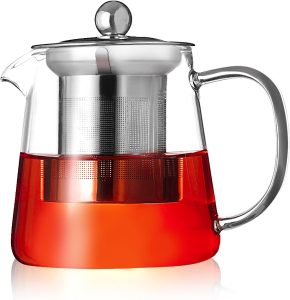
The Swap: Swap to loose leaf tea, made in a stainless steel or glass teapot. Make sure all components of the tea pot are glass or stainless steel. Most good loose leaf tea will sink to the bottom of the cup during brewing, so you often don’t even need a teapot.
Deep Dive: Finding tea bags without plastic is actually quite tricky. Most major brands will use paper for the bags, but they will glue them together. This glue can me a plant based glue, but it is still glue. In fact its such a minefield I have made the littel list below to help you out:
- TERRIBLE – 100% Nylon / PET Synthetic Mesh Bags (Pyramid “silken” bags)
- BETTER – Paper Bags with Polypropylene Sealant (Fossil-fuel plastic)
- GOOD – Paper Bags with PLA Bio-Polymer Sealant (Bioplastic / Plant starch)
- AMAZING – Paper Bags with Cotton Thread Stitching / Mechanical Crimping (100% Polymer-Free)
- BEST – Loose-Leaf Tea in Stainless Steel / Glass Infusers (Absolute zero paper or polymer contact)
2nd (Really Bad) – Microwaving Plastic Containers: Thermal Excitation and Hot Spots
If plastic tea bags are public enemy number one, microwaving food in plastic containers is a very close second. The “Microwave Safe” stamp on the bottom of a Tupperware container is wildly misleading: it simply means the vessel won’t melt or deform structurally during heating—it is not a guarantee against chemical leaching or microplastic migration.
When you microwave food, radio waves excite water, fat, and sugar molecules inside the meal, raising temperatures rapidly. Because fats and oils can quickly exceed 100c (212F), they create extreme, localized hot spots directly against the container’s interior walls.
This localized heat causes severe thermal agitation of the polymer chains (typically polypropylene or polyethylene). As the chemical bonds expand and weaken, the mechanical energy from boiling liquid and steam forces millions of polymer fragments to break off directly into your food.
A landmark study from the University of Nebraska-Lincoln (Hussain et al., Environmental Science & Technology) found that microwaving plastic food containers for just 3 minutes released up to 4.22 million microplastics and 1.21 billion nanoplastics per square centimetre of container surface area.
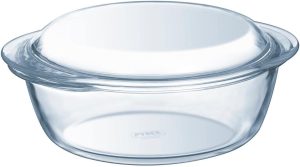
The Swap: Never heat food in plastic, period. Phase out your plastic containers and use strictly for cold storage until they are gone, if you must use them. Transfer leftovers onto a glass dish, ceramic plate, or pyrex container before putting them in the microwave. Many pyrex food storage containers come with “rubber” or plastic lids. Although less practical it is better to find pyrex containers with glass lids, or you could choose round containers and use a plate as a lid, to save money.
Deep Dive: The regulatory definition of “Microwave Safe” was created decades ago to prevent plastic containers from melting into hot soup and causing physical burns. It was never designed to account for nano-scale particle shedding.
When you heat fatty foods—like a curry, bolognaise, or oily stew—the fats absorb microwave energy far more efficiently than water, frequently creating temperatures high enough to pit, scar, or leave a white residue ring around the inside of the plastic bowl. If you see those rough, white ring-marks on your plastic containers, that is permanent structural damage: the missing plastic didn’t vanish, it migrated directly into your previous meals.
3rd (Bad) – The Kettle: Thermal Fatigue and Hydrolysis
Most “stainless steel” kettles on the market still harbour a dirty secret: plastic water-level windows, internal plastic lids, and plastic mesh filter brackets. These components are subjected to one of the most hostile environments in your kitchen, making them prime culprits for plastic shedding.
The science behind this comes down to two destructive forces: thermal cycling and hydrolysis.
Every time you boil a kettle, the internal plastic parts rapidly expand with the heat and then contract as they cool. This constant expansion and contraction is known as thermal cycling, which induces thermal fatigue. Simultaneously, exposing polymers (usually polypropylene or polycarbonate) to boiling water causes hydrolysis—a chemical reaction where water molecules actively attack and sever the long polymer chains that give the plastic its structural strength.
Over a few years of daily use, this relentless combination leads to severe embrittlement. The plastic entirely loses its elasticity and tensile strength, which is why those internal filter brackets eventually become so brittle that they crumble into chalky pieces when you pinch them with your bare fingers. Long before the plastic catastrophically fails in your hands, it has been heavily shedding microplastics directly into your boiling water with every cup of tea.
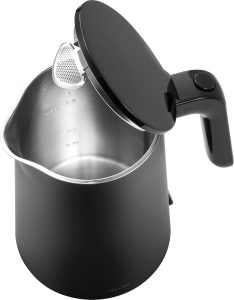
The Swap: You need a kettle where exactly zero plastic touches the water. The above kettle manufactures by Zwilling is a kettle with a 100% stainless steel interior. So the contact between boiling water and plastic is practically zero. Note is doesn’t have a window on the side, which are often made of plastic. And alternative might
4th (Quite Bad) – Food Storage: The Dishwasher Effect
Polypropylene (standard Tupperware) is technically microwave and dishwasher “safe,” meaning it won’t melt into a puddle. However, it is not immune to hydrolysis. The combination of scalding water, highly alkaline dishwasher detergents, and sustained heat cycles causes the plastic surface to become brittle and micro-flake over time. If your clear plastic storage containers look cloudy, scratched, or feel rough to the touch, they are actively shedding.
The Swap: Glass storage containers glass or steel lids. If you must use your existing plastic containers, wash them by hand in lukewarm water to significantly extend their structural integrity. As an instant and free option, why not use a spare cereal bowl to store leftovers and cover it with a plate. . . you don’t need to buy anything.
5th – (Quite Bad) – The Chopping Board: Mechanical Abrasion
Every time a steel kitchen knife scores a plastic polyethylene chopping board, it creates a microscopic groove, shaving off thousands of invisible plastic particles. Recent environmental health studies estimate that regular use of a plastic board can expose a person to tens of millions of microparticles annually.
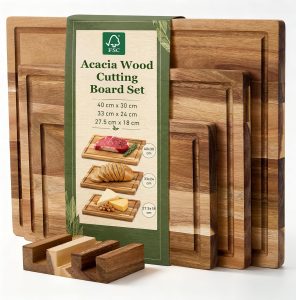
The Swap: Switch to a wooden board. End-grain wood is naturally antimicrobial and self-healing. Any microscopic fibers that do end up in your meal are harmless, digestible cellulose rather than synthetic polymers.
Deep Dive: Try to get a chopping board made from FSC (sustainable timber) and be careful of chopping board oils, which often are petroleum based. “FDA” approved are very low in PAHs and VOCs but they are not free of such substances. For the ultimate eco option choose fractionated coconut oil in a glass bottle.
The gains from a food safety point of view are very small, but from a scientific point of view this is a good move. For those wishing to avoid oiling the chopping board altogether that is fine but it comes with a higher biological risk, as an un-oiled board is more prone to holding bacteria.
6th (Why Not?) – The Spatula: Thermal Degradation
Plastic spatulas and spoons suffer from thermal degradation. When exposed to the high heat of a frying pan, the molecular bonds in nylon and even high-heat plastics begin to weaken. Combine that heat with the mechanical friction of stirring a heavy stew, and the plastic degrades rapidly, leaving trace plastics in the pan.
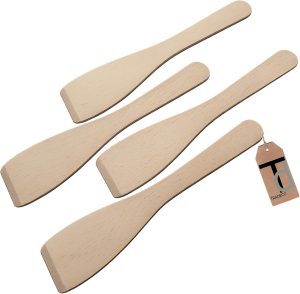
The Swap: Wood or stainless steel. A wooden spatula will not melt into your simmering pasta sauce, and a steel fish slice will outlast you. Keep your flexible plastic or silicone utensils strictly for cold prep and baking.
Leave a Reply