Category: Microplastics

  • Microplastics in the Kitchen: A Scientific Guide to Upgrading Your Prep Gear

    Trust Me I’m A Scientist

    Micro plastic are a “trending” topic, but as an environmental scientist, I look beyond the trends and focus on the hard science that will reduce the level of microplastics you are exposed to in your kitchen.

    Myths

    You may have read about many  crazy myths regarding micro plastic exposure, which I have debunked here. But there some other more subtle ones.

    I have been very careful to double check all of this information, even as I was using AI (Automated Inference) to help draft some sections, there were mistakes introduced. One of the the most common myths I found that made it is to AI generated content is that silicone is often included as a seal in “plastic free” products. Silicone is not better than plastic, and should be avoided.

    The Science

    Here is the science behind how your kitchen prep gear degrades, and how to logically upgrade your equipment. I ordered these bad to worse where evidence exists. I have made suggestions on what to get here but in general choose:

    • Uncoated Stainless Steel or Cast Iron

    • Glass & Ceramic

    1st (Worst) – Plastic Tea Bags: Noooooooooooo. . . . .

    Although these are not actually kitchen equipment as such, they are absolutely terrible. And I mention them whenever I can. Its especially vexing, because often these are sold as a premium product, and can actually be labelled as “organic” . .  the tea leaves might be organic, but that plastic tea bag is definitely not.

    A  study by McGill University (Hernandez et al., Environmental Science & Technology) found that steeping a single plastic tea bag at brewing temperature releases approximately 11.6 billion microplastics and 3.1 billion nanoplastics into a single cup of tea.

    Boiling water acts directly on the ultra-thin, high-surface-area mesh of nylon or PET. Because the hot liquid fully permeates the fine mesh structure, it causes immediate thermal degradation and particle shedding directly into the beverage you consume immediately.
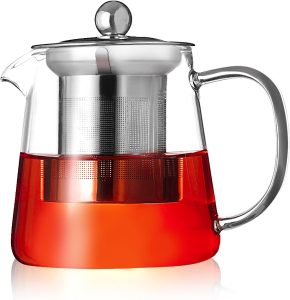
    The Swap: Swap to loose leaf tea, made in a stainless steel or glass teapot. Make sure all components of the tea pot are glass or stainless steel. Most good loose leaf tea will sink to the bottom of the cup during brewing, so you often don’t even need a teapot.

    Deep Dive: Finding tea bags without plastic is actually quite tricky. Most major brands will use paper for the bags, but they will glue them together. This glue can me a plant based glue, but it is still glue. In fact its such a minefield I have made the littel list below to help you out:

    2nd (Really Bad) – Microwaving Plastic Containers: Thermal Excitation and Hot Spots

    If plastic tea bags are public enemy number one, microwaving food in plastic containers is a very close second. The “Microwave Safe” stamp on the bottom of a Tupperware container is wildly misleading: it simply means the vessel won’t melt or deform structurally during heating—it is not a guarantee against chemical leaching or microplastic migration.

    When you microwave food, radio waves excite water, fat, and sugar molecules inside the meal, raising temperatures rapidly. Because fats and oils can quickly exceed 100c (212F), they create extreme, localized hot spots directly against the container’s interior walls.

    This localized heat causes severe thermal agitation of the polymer chains (typically polypropylene or polyethylene). As the chemical bonds expand and weaken, the mechanical energy from boiling liquid and steam forces millions of polymer fragments to break off directly into your food.

    A landmark study from the University of Nebraska-Lincoln (Hussain et al., Environmental Science & Technology) found that microwaving plastic food containers for just 3 minutes released up to 4.22 million microplastics and 1.21 billion nanoplastics per square centimetre of container surface area.
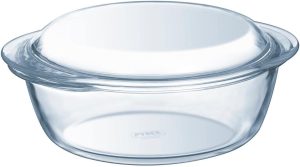
    The Swap: Never heat food in plastic, period. Phase out your plastic containers and use strictly for cold storage until they are gone, if you must use them. Transfer leftovers onto a glass dish, ceramic plate, or pyrex container before putting them in the microwave. Many pyrex food storage containers come with “rubber” or plastic lids. Although less practical it is better to find pyrex containers with glass lids, or you could choose round containers and use a plate as a lid, to save money.

    Deep Dive: The regulatory definition of “Microwave Safe” was created decades ago to prevent plastic containers from melting into hot soup and causing physical burns. It was never designed to account for nano-scale particle shedding.

    When you heat fatty foods—like a curry, bolognaise, or oily stew—the fats absorb microwave energy far more efficiently than water, frequently creating temperatures high enough to pit, scar, or leave a white residue ring around the inside of the plastic bowl. If you see those rough, white ring-marks on your plastic containers, that is permanent structural damage: the missing plastic didn’t vanish, it migrated directly into your previous meals.

    3rd (Bad) – The Kettle: Thermal Fatigue and Hydrolysis

    Most “stainless steel” kettles on the market still harbour a dirty secret: plastic water-level windows, internal plastic lids, and plastic mesh filter brackets. These components are subjected to one of the most hostile environments in your kitchen, making them prime culprits for plastic shedding.

    The science behind this comes down to two destructive forces: thermal cycling and hydrolysis.

    Every time you boil a kettle, the internal plastic parts rapidly expand with the heat and then contract as they cool. This constant expansion and contraction is known as thermal cycling, which induces thermal fatigue. Simultaneously, exposing polymers (usually polypropylene or polycarbonate) to boiling water causes hydrolysis—a chemical reaction where water molecules actively attack and sever the long polymer chains that give the plastic its structural strength.

    Over a few years of daily use, this relentless combination leads to severe embrittlement. The plastic entirely loses its elasticity and tensile strength, which is why those internal filter brackets eventually become so brittle that they crumble into chalky pieces when you pinch them with your bare fingers. Long before the plastic catastrophically fails in your hands, it has been heavily shedding microplastics directly into your boiling water with every cup of tea.
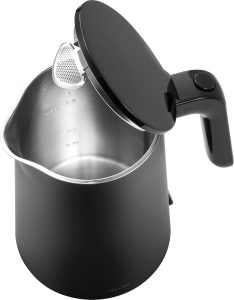
    The Swap: You need a kettle where exactly zero plastic touches the water. The above kettle manufactures by Zwilling is a kettle with a 100% stainless steel interior. So the contact between boiling water and plastic is practically zero. Note is doesn’t have a window on the side, which are often made of plastic. And alternative might

    4th (Quite Bad) – Food Storage: The Dishwasher Effect

    Polypropylene (standard Tupperware) is technically microwave and dishwasher “safe,” meaning it won’t melt into a puddle. However, it is not immune to hydrolysis. The combination of scalding water, highly alkaline dishwasher detergents, and sustained heat cycles causes the plastic surface to become brittle and micro-flake over time. If your clear plastic storage containers look cloudy, scratched, or feel rough to the touch, they are actively shedding.

    The Swap: Glass storage containers glass or steel lids. If you must use your existing plastic containers, wash them by hand in lukewarm water to significantly extend their structural integrity. As an instant and free option, why not use a spare cereal bowl to store leftovers and cover it with a plate. . . you don’t need to buy anything.


    5th – (Quite Bad) – The Chopping Board: Mechanical Abrasion

    Every time a steel kitchen knife scores a plastic polyethylene chopping board, it creates a microscopic groove, shaving off thousands of invisible plastic particles. Recent environmental health studies estimate that regular use of a plastic board can expose a person to tens of millions of microparticles annually.
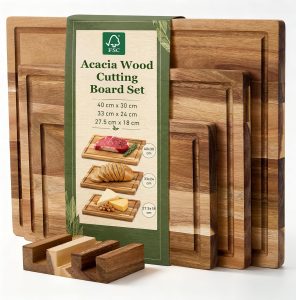
    The Swap: Switch to a wooden board. End-grain wood is naturally antimicrobial and self-healing. Any microscopic fibers that do end up in your meal are harmless, digestible cellulose rather than synthetic polymers.

    Deep Dive: Try to get a chopping board made from FSC (sustainable timber) and be careful of chopping board oils, which often are petroleum based. “FDA” approved  are very low in PAHs and VOCs but they are not free of such substances. For the ultimate eco option choose fractionated coconut oil in a glass bottle.

    The gains from a food safety point of view are very small, but from a scientific point of view this is a good move. For those wishing to avoid oiling the chopping board altogether that is fine but it comes with a higher biological risk, as an un-oiled board is more prone to holding bacteria.

    6th (Why Not?) – The Spatula: Thermal Degradation

    Plastic spatulas and spoons suffer from thermal degradation. When exposed to the high heat of a frying pan, the molecular bonds in nylon and even high-heat plastics begin to weaken. Combine that heat with the mechanical friction of stirring a heavy stew, and the plastic degrades rapidly, leaving trace plastics in the pan.
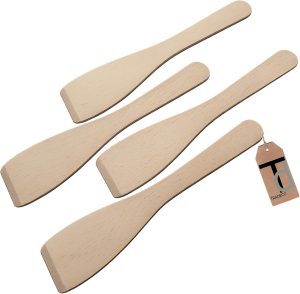
    The Swap: Wood or stainless steel. A wooden spatula will not melt into your simmering pasta sauce, and a steel fish slice will outlast you. Keep your flexible plastic or silicone utensils strictly for cold prep and baking.

    Lighting Assessments Bristol

    Ocean Plastic Charity  


  • The Dark Truth Behind Scottish Farmed Salmon

    The Dark Truth Behind Scottish Farmed Salmon: Beyond the Campaign

    Today, a powerful new campaign video by Project Slingshot was released, starring wildlife expert and environmentalist Chris Packham. The video ruthlessly tears down the “luxury” marketing image of Scottish factory-farmed salmon, exposing the grim and often stomach-turning reality of what goes on beneath the surface of those supposedly pristine lochs.

    In the video, Packham highlights several disturbing problems with the aquaculture industry. Confined to cramped and unnatural conditions, the salmon are often plagued by disease and eaten alive by sea lice. To combat these parasites, the industry drenches the salmon in toxic chemical baths, relying on harsh treatments like hydrogen peroxide and formaldehyde. Furthermore, the appealing pink colour of the salmon you see on supermarket shelves isn’t natural—it is a result of synthetic colorants and pigments added directly to their feed.

    The Hidden Danger: Nanoplastics in Commercial Feed

    While the new campaign video brings vital attention to animal welfare and chemical baths, it missed out on another massive, hidden danger associated with farmed salmon: the pervasive contamination of their flesh by microplastics and nanoplastics.

    The commercial feed given to these fish introduces a steady stream of plastic particulates into their diet. In marine environments, baseline mass concentrations of microplastics in fish tissues have been measured at around 8.08 µg/kg, but the concentrated nature of commercial fishmeal in intensive aquaculture drastically exacerbates this exposure. Studies looking at intensive aquaculture environments note that heavily exposed seafood can accumulate averages of one to two microplastic particles per gram of tissue. Most alarmingly, because nanoplastics are minuscule enough to penetrate cellular membranes, they do not just pass through the digestive tract; they migrate directly into the muscle tissue—the very fillet that ends up on your dinner plate.

    Toxic Chemical Leaching in Oily Fish

    Physical plastic particles are only half the problem. Salmon is a naturally oily fish. When plastics sit in a highly lipid-rich (oily) environment, the fish’s natural fats act as a solvent. This process actively leaches harmful chemical additives—such as Bisphenol A (BPA), phthalates, triclosan, and polybrominated diphenyl ethers (PBDEs)—out of the ingested plastics and into the salmon’s flesh.

    When you eat farmed salmon, you are consuming the concentrated toxic chemical runoff of their plastic-laced diet. These leached substances are known endocrine-disrupting chemicals (EDCs). For humans, the health risks are severe and well-documented in peer-reviewed literature:

    • Endocrine Disruption: EDCs leached from plastics have been shown to disrupt the hypothalamic-pituitary-thyroid (HPT) and hypothalamic-pituitary-gonadal (HPG) axes.
    • Reproductive Impacts: Disruption of the HPG axis can lead to severe reproductive issues, delayed follicular development, and diminished sperm quality.
    • Cellular Damage and Oxidative Stress: Ingestion of micro- and nanoplastics induces significant oxidative stress and cytotoxicity. Notably, nanoplastics elicit a stronger lipid peroxidation (cellular damage) response than larger microplastics due to their enhanced cellular uptake.
    • Systemic Inflammation: Once ingested by humans, these particles can translocate to the circulatory system, potentially causing chronic inflammation, metabolic disorders, and immune system dysfunction.

    Mitigating Environmental Impact in Aquaculture

    Addressing these systemic issues requires rigorous environmental oversight. If you are involved in coastal development, commercial fishing, or industrial farming, consulting with independent environmental experts is crucial to prevent further ecological damage. Southwest Environmental Limited provides specialist environmental consultancy in the UK, helping businesses navigate complex ecological responsibilities,.

    Whether an aquaculture operation requires a comprehensive Environmental Impact Assessment, support with Environmental Permits, or a detailed Preliminary Ecological Appraisal, Southwest Environmental Limited’s team of Ecology Consultants ensures that commercial practices are sustainable, compliant, and protective of our vulnerable marine ecosystems.

    Watch the Campaign Video


    Peer-Reviewed References & Further Reading

    • Micro- and Nanoplastics as Disruptors of the Endocrine System: Highlights how chemicals like PBDEs, BPAs, and phthalates absorbed from plastics severely disrupt the HPT and HPG axes, leading to reproductive dysfunction and oxidative stress. (National Center for Biotechnology Information / PMC)
    • Microplastics in Fish and Fishery Products and Risks for Human Health (2022): Details the cytotoxicity of microplastics, metabolic disorders, and immune system dysregulation resulting from particle translocation into the circulatory system. (MDPI – Int J Environ Res Public Health)
    • Absence of microplastic bioaccumulation in cod fillets from plastic (2024): Provides baseline quantitative mass concentrations showing microplastic loads in marine environments averaging 8.08 µg/kg. (OAE Publishing)
    • Microplastics in Seafood: Which Fish Are Safest to Eat? (2026): Outlines the accumulation of 1–2 microplastic particles per gram in intensive aquaculture and the ability of nanoplastics to penetrate cell membranes into muscle tissue. (Microplastics App Research)
    • Microplastics, Endocrine Disruptors, and Oxidative Stress (2025): Emphasizes that nanoplastics elicit stronger lipid peroxidation cellular responses than larger microplastics at comparable mass doses. (MDPI – Int J Mol Sci)
  • How to Eat a Low Plastic Diet

    How to Eat a Low Plastic Diet

    Plastic is being found in our brains, livers and blood. So it is imperative we reduce our exposure to it. As this website emphasis is on the food we eat we here give advice on how to eat a low plastic diet.

    Food & Drink Choices

    There are certain foods and drinks that are worth avoiding. The units are typically given as the number of microplastic particles per liter (particles/L), per kilogram (particles/kg), or per gram (particles/g). The below graph we have use conversion of 1g for each ml of liquid, so as to compare across solids and liquids. Note the scale is logarithmic! :-/


    1. Bottled Water: Ranges vary widely, but recent studies using advanced detection methods have found concentrations ranging from 110,000 to 400,000 particles per liter, with some reporting averages around 240,000 particles/L, predominantly nanoplastics. Older studies focusing on larger microplastics reported lower counts.
    2. Seafood (especially Shellfish): Concentrations in shellfish (mussels, oysters, clams) have been reported in the range of 0 to 10.5 microplastics per gram (MPs/g) of tissue. Crustaceans like shrimp have shown ranges up to 10.67 MPs/g in wild-caught samples. Fish generally have lower concentrations, ranging from 0 to 2.9 MPs/g.
    3. Salt: Studies have found microplastic concentrations in sea salt ranging from 0 to 1,674 particles per kilogram (n/kg), with some studies reporting averages around 30-35 MPs/kg. Lake and rock salts generally show lower levels.
    4. Tea (especially Tea Bags): Steeping plastic tea bags (nylon or polypropylene) can release billions of microplastic particles per cup. One study found approximately 11.6 billion microplastics and 3.1 billion nanoplastics per cup from a single plastic tea bag. Another recent study found polypropylene tea bags releasing around 1.2 billion particles per milliliter.
    5. Honey: Studies have detected microplastics in honey with concentrations ranging from 0.1 to 8.18 particles per gram (MPs/g). Older studies reported ranges like 54 to 336 particles per kilogram.
    6. Beer: While specific concentration ranges are less frequently reported as a primary focus, microplastics have been detected in various beer samples. One older study found an average of 4.05 microplastic particles per liter.
    7. Processed Foods: Due to the wide variety of processed foods and the potential for contamination at multiple stages, providing a specific concentration range is difficult. However, studies have consistently found the presence of microplastics in various processed items.
    8. Fruits and Vegetables: Microplastic concentrations in fruits and vegetables vary. Some studies have reported ranges from tens to thousands of particles per kilogram, depending on the type of produce and the level of environmental contamination.
    9. Pre-cooked/Instant Rice: One study found significantly higher levels of microplastics in instant rice compared to conventionally cooked rice, with concentrations ranging from 200 to 360 particles per 100g. Washing the rice reduced these levels by 20-40%.
    10. Proteins (Meat and Plant-Based Alternatives): A recent study found microplastics in a high percentage of protein samples, with processed options like fish sticks and chicken nuggets showing higher concentrations, but specific concentration ranges across all categories were not the primary focus.

    Choices when Shopping

    Changes to your lifestyle may start at the grocery store. Try to avoid as much plastic as possible:

    • Bulk Bins: Bring your own reusable cloth bags or containers for grains, nuts, seeds, pasta, and other bulk items.
    • Farmers Markets: Purchase fresh produce that isn’t pre-packaged in plastic. Bring your own reusable bags.
    • Loose Produce: Opt for loose fruits and vegetables at the grocery store and use reusable produce bags.
    • Butcher and Deli Counters: Ask for meat and cheese to be wrapped in paper or bring your own reusable containers.
    • Plastic-Free Stores: Seek out zero-waste stores where you can refill containers with various food items.

    Packaging Choices

    If you are trying to avoid plastic packaging, then you may want to consider some alternatives:

    • Glass Containers: Store leftovers and pantry staples in glass jars and containers. They are durable, reusable, recyclable, and don’t leach chemicals.
    • Stainless Steel: Use stainless steel containers for food storage and lunch boxes. They are lightweight, airtight, and durable.
    • Beeswax or Vegan Wraps: Use these reusable wraps instead of plastic cling film.
    • Silicone Lids and Bags: Opt for reusable silicone lids for bowls and silicone bags for snacks and lunches.   < This is a terrible idea suggested by AI. Don’t use silicone. 
    • Cardboard and Paper: Choose products packaged in cardboard or paper when possible, ensuring they aren’t lined with plastic.
    • Tiffin Carriers: Consider using traditional stainless steel tiffin carriers for packed lunches

    Kitchen Choices

    • Avoid Heating Plastics: Never microwave or heat food in plastic containers, as heat can cause chemicals to leach into your food. Use glass or ceramic instead.
    • Ditch Plastic Kitchen Utensils: Replace plastic spatulas, spoons, and cutting boards with wood, bamboo, glass, or stainless steel alternatives.
    • Use Natural Cleaning Tools: Swap plastic sponges for plant-based options like bamboo or loofah sponges.
    • Wash Plastics by Hand: Dishwasher temperatures can degrade plastic and lead to microplastic shedding, even in dishwasher-safe items.

    This post was created with help from Gemini AI

    Flood Risk Assessment London

    Lux Contour Plans 

    Preliminary Ecological Appraisal